
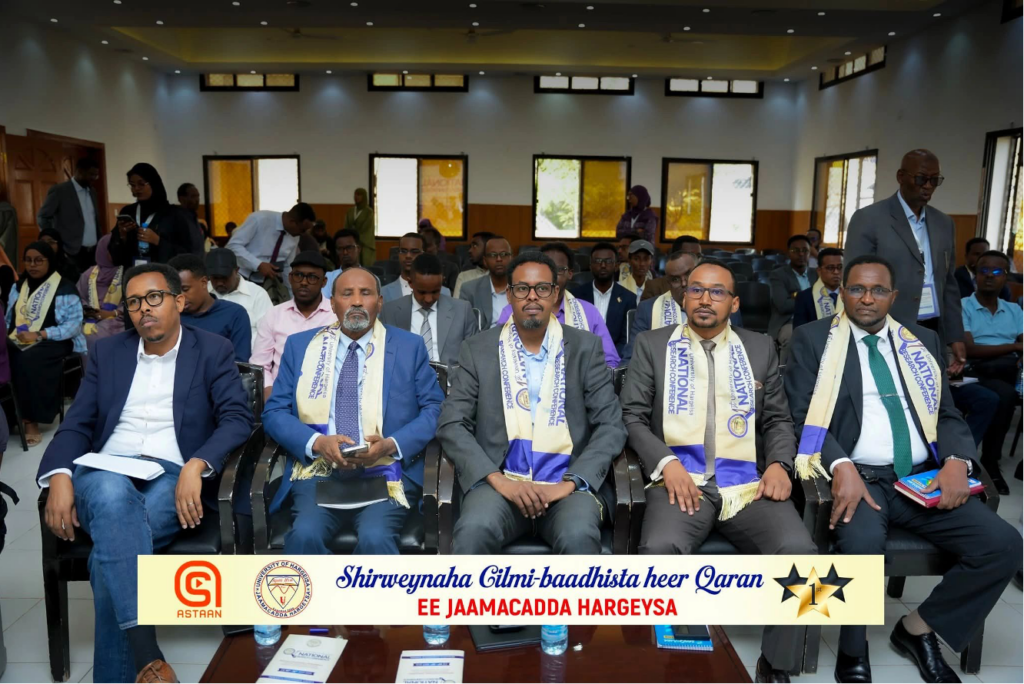
The University of Hargeisa is proud to present the first series of policy briefs, synthesizing evidence from the 1st National Research Conference, 2025. This series provides actionable insights for policymakers, development partners, and stakeholders, bridging research evidence with practical strategies to address Somaliland’s social, economic, and health challenges.
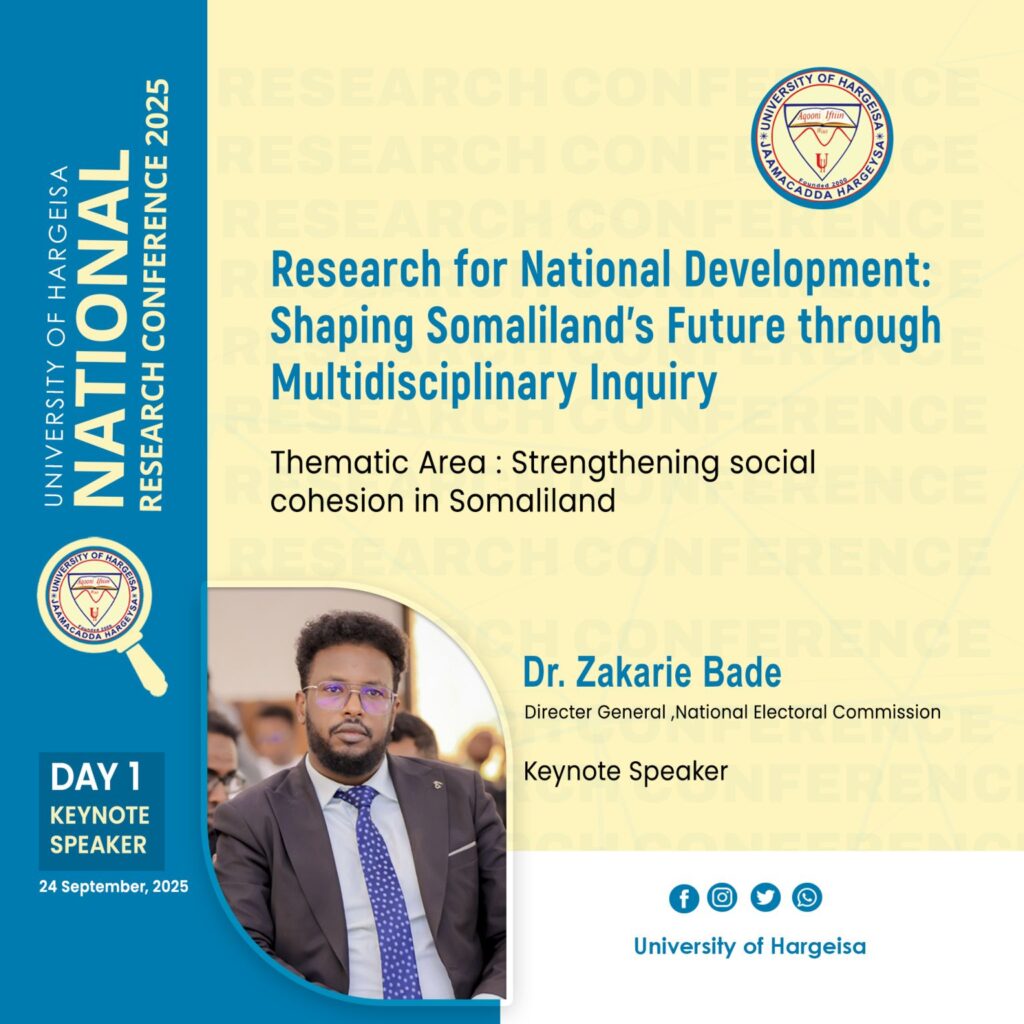
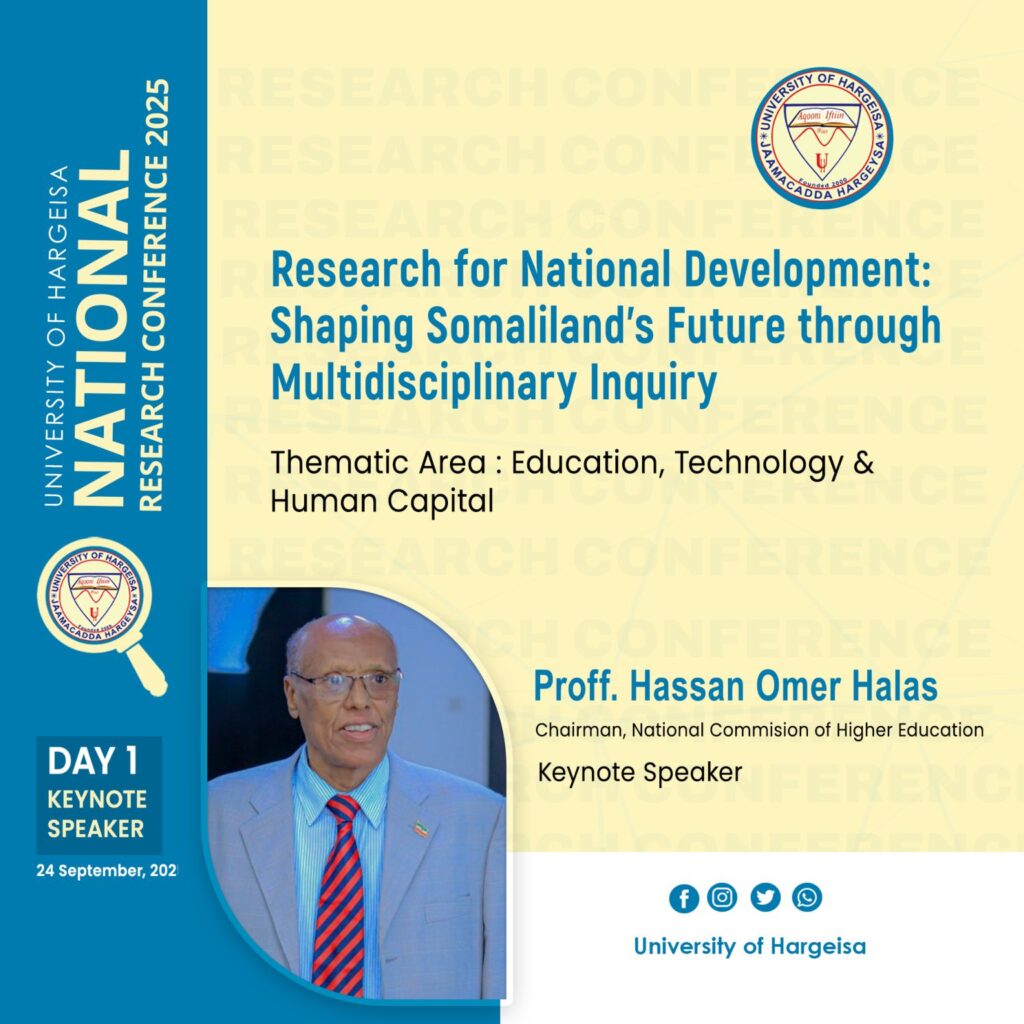
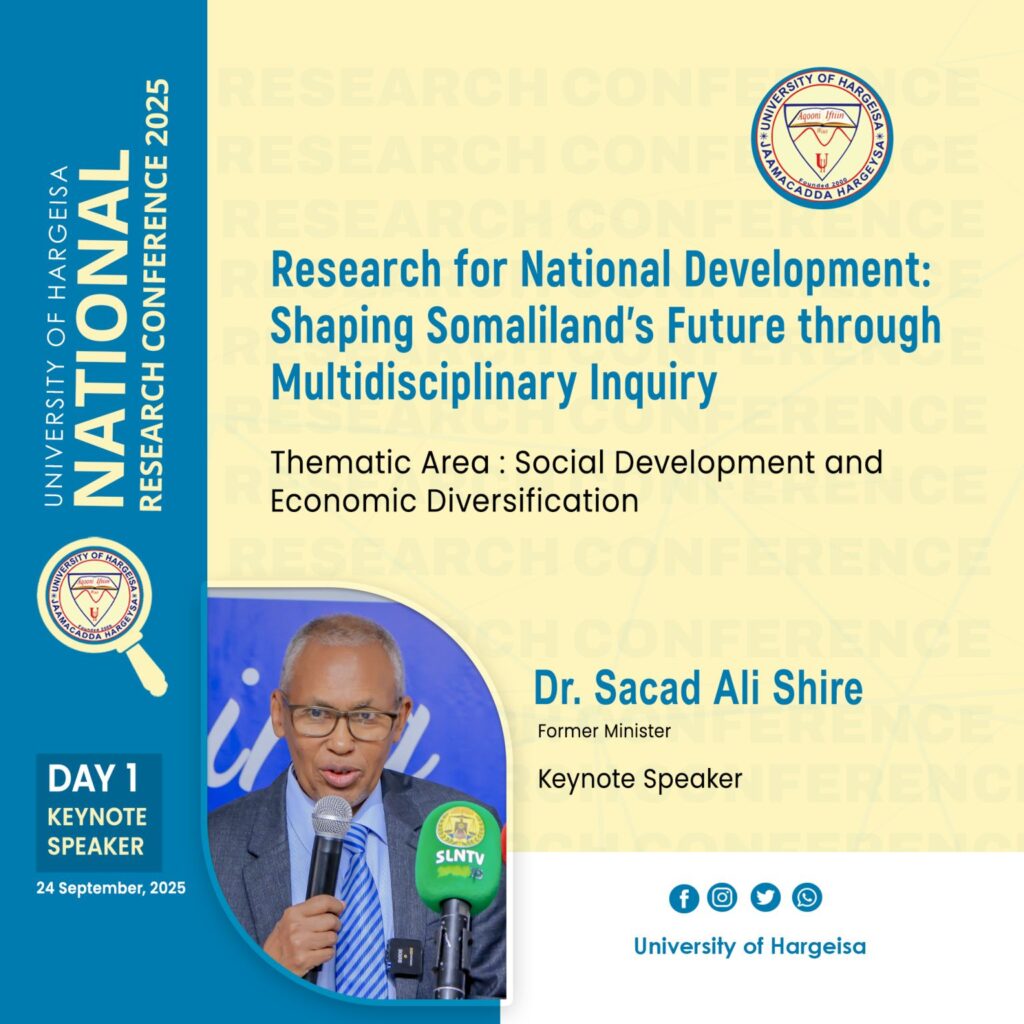
1. Strengthening Health & Social Systems for Sustainable Well-being
Somaliland continues to make progress in population health, yet challenges remain in maternal and child health, nutrition, mental health, and non-communicable diseases (NCDs). Vulnerable populations—including rural, nomadic, displaced communities, women, and children—bear a disproportionate burden.
Key Recommendations:
- Scale up equitable maternal and child health services.
- Integrate mental health into primary care.
- Strengthen nutrition programs and laboratory/information systems.
- Promote women’s autonomy and community engagement.
- Foster inter-ministerial collaboration for resilient health systems.
2. Building Resilient Livelihoods Through Climate Adaptation & Sustainable Agriculture
Somaliland’s communities face increasing climate variability, affecting agriculture, livestock, and livelihoods. Rain-fed farming, water scarcity, and limited institutional support reduce resilience.
Key Recommendations:
- Strengthen water resource management and irrigation systems.
- Promote climate-smart agriculture and livestock practices.
- Diversify livelihoods and enhance market access.
- Build institutional capacity for adaptive governance and inter-sectoral coordination.
3. Strengthening Governance, Security & Diplomatic Engagement
Effective governance, security, and diplomacy are critical for stability and Somaliland’s aspirations for recognition. Challenges include electoral management, tax and procurement inefficiencies, and security coordination.
Key Recommendations:
- Improve electoral processes and civic participation.
- Reform tax collection and procurement transparency.
- Strengthen centralized security frameworks (SISA) with oversight mechanisms.
- Strategically manage international engagement and diplomatic partnerships.
4. Accelerating Rural Development & Economic Diversification
Rural poverty and dependence on livestock and informal trade hinder economic growth. Structural constraints limit education, agricultural productivity, and diversification opportunities.
Key Recommendations:
- Strengthen livestock value chains and agricultural productivity.
- Expand access to digital financial services.
- Implement governance reforms in taxation and public procurement.
- Promote clean energy access to enhance livelihoods and sustainability.
5. Empowering Somaliland’s Future Through Inclusive Education & Digital Innovation
Education is central to Somaliland’s socio-economic development. Persistent gaps remain in gender equity, digital literacy, and STEM education. Digital technologies offer opportunities but require stronger infrastructure and institutional support.
Key Recommendations:
- Ensure gender equity and inclusive learning opportunities.
- Integrate digital learning in schools to improve outcomes.
- Strengthen STEM education and teacher capacity.
- Build leadership and institutional support for sustainable education reform.
- Engage communities and media to amplify reform efforts.
Full Policy Brief Series
The briefs provide evidence-based recommendations across sectors, highlighting the importance of multisectoral collaboration, inclusive policy design, and community engagement to achieve sustainable development in Somaliland.
Download the full policy brief here
© 2026 University of Hargeisa. All rights reserved. This policy brief represents the perspectives of the authors participating in the 1st National Research Conference.
This work is licensed under a Creative Commons Attribution 4.0 International License (CC BY 4.0).