

Background
In the World Health Assembly resolution “WHA71.7” dated 26 May 2018, it is emphasized how crucial digitalization is in medicine “through the promotion of evidence-based digital health interventions.” Implementing appropriate digital health technologies is a key component of national health strategies but remains challenging for many low- and middle-income countries, as highlighted in the Global Strategy on Digital Health (WHO) 2020–2025.
The Digital Health Project aims to improve the quality of higher education in Somaliland by developing micro-credentials in digital health, equipping future doctors with the skills required in a modern health system.
The project directly addresses two overarching priorities under Strand 1 of Region 9: Sub-Saharan Africa:
- Sustainable growth and jobs: Skills, entrepreneurship, employability, labour market links, job creation (especially in rural areas), and private sector engagement. The DigHealth project supports this priority by training doctors and healthcare personnel in telemedicine—a highly needed area in Somaliland.
- Governance, peace, security, human development, sustainable growth and jobs: (Human rights, social/economic rights, democracy, governance, citizenship, health, youth, gender, access and inclusion). The DigHealth project contributes by improving healthcare education in Somaliland.
Project Activities
- Needs and competencies analysis to better understand the gaps in digital health education and the design of the micro credentials courses.
- Equipping University of Hargeisa with modern equipment for training telemedicine.
- Development of the micro credentials educational program consisting of 30 ECTS credits, launching of digital health and training of healthcare providers on telemedicine.
- Engagement of different stakeholders in health including hospitals and health care centres to pilot test the digital health program.
- Countinous promotion of digital health among relevant stakeholders through multiple awareness raising actions both internally (at the level of the involved institutions) & externally (national, international level).
University of Hargeisa Outputs in the Project
The University of Hargeisa has actively participated in the implementation of WP1: Project Management and Coordination. Two representatives attended the kickoff meeting in Greece in January 2025, where the partnership agreement was signed. The University also contributed to online sessions on “Best Practices for Developing Digital Health Education.”
The University of Hargeisa played a central role in developing the questionnaire designed to assess gaps in digital health education and inform the micro-credential course design. The questionnaire was disseminated to relevant stakeholders to gather insights on the status of digital health in Somaliland.
Participation in Annual Meeting and Digital Health Training Programme (Greece & Croatia, September – October 2025)
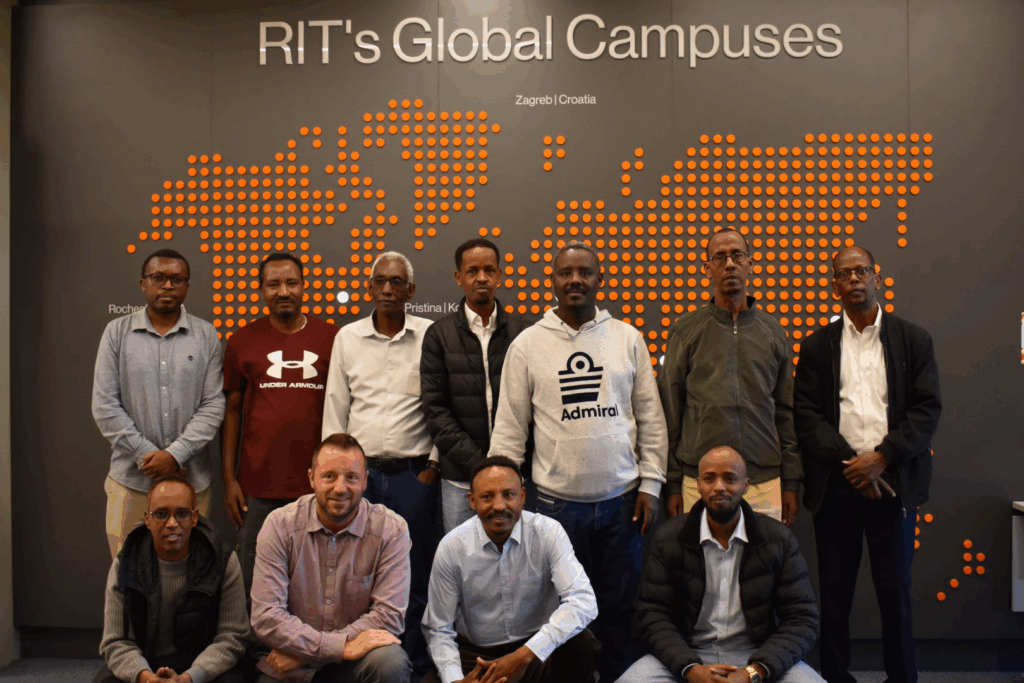
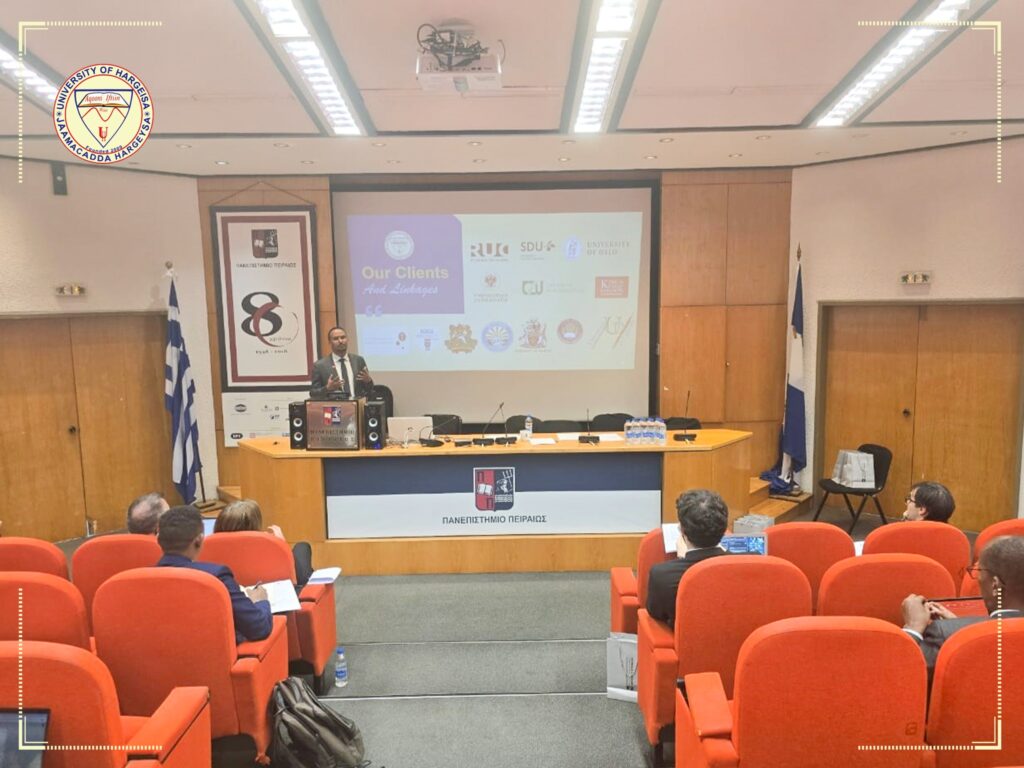
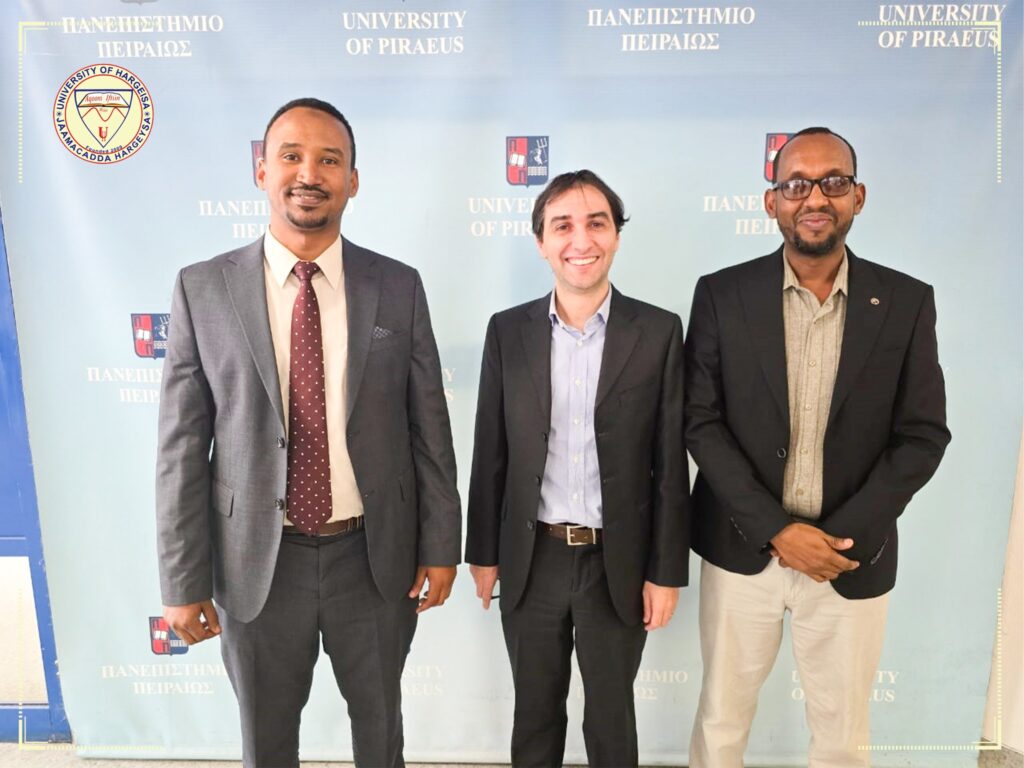
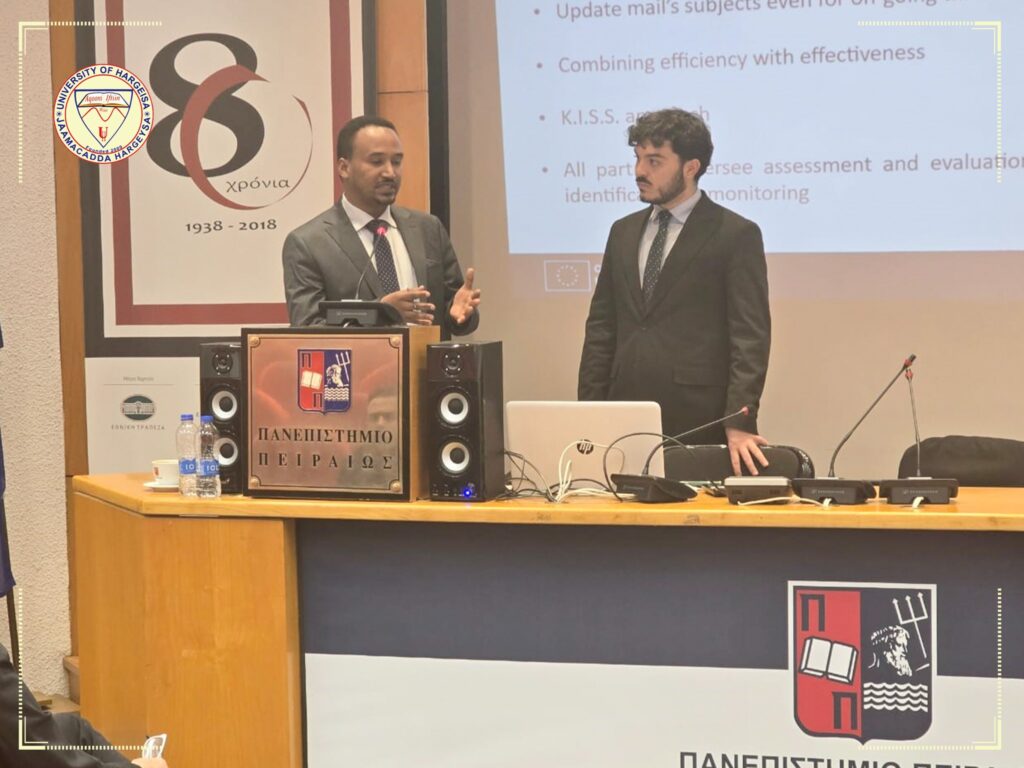
The University of Hargeisa is pleased to highlight its active involvement in the DigHealth project’s first annual meeting and intensive training programme, held from 29 September to 10 October 2025 in Greece and Croatia. This milestone represents a major advancement in strengthening digital health education for Somaliland.
Hosted by the University of Piraeus (Greece) and RIT Croatia (Zagreb), the two-week programme combined high-level project coordination meetings with practical training for faculty and health educators. Representatives from the University of Hargeisa participated in both components, contributing to strategic discussions while gaining hands-on knowledge in emerging digital health technologies.
The training sessions offered in-depth exposure to telemedicine, remote patient monitoring, teleconsultation, and the development of secure digital health systems. Study visits to clinical facilities in Athens and Zagreb provided additional insights into real-world implementation of digital health and telemedicine practices.
Running until November 2027, the DigHealth project aims to equip educators and healthcare professionals with essential digital competencies—ultimately strengthening healthcare delivery and improving access to quality care in remote and underserved areas
The European Union and Our Partners in Digital Health Project
We sincerely thank the European Union for funding this project under the Erasmus programme.
We also deeply appreciate our partners, RIT Croatia, University of Piraeus, Hrvatsko Katolicko Sveuciliste, Institute De Haute Formation Aux Politiques Communautaires, Addis Ababa University, Bule Hora University, Jigjiga University, Horseed International University and Somali Education and Youth Development Action for their continued partnership.
Your support and collaboration are vital to the success and progress of this initiative.